Few cities have lived as close to the spice trade as Kochi. Ships came here for pepper, cardamom and cloves long before biriyani became a household word, and traders of many faiths and flags left something behind: a recipe, a technique, a habit of sharing a meal. It is no surprise that a dish built on spice, patience and gathering became the meal Kochi reaches for on its best days.
This is a short tour of that love, through four places where Kochi's biriyani story is told: Fort Kochi, Mattancherry, Thoppumpady and Ernakulam.
A dish that arrived by sea
The word biriyani is generally traced to Persian, from birian, meaning fried before cooking, and birinj, meaning rice. The dish travelled across India along trade routes and was refined in many kitchens. On the Kerala coast its story is tied to the Arab traders who began reaching the Malabar coast from around the seventh century. Many settled and married locally, and their descendants, the Mappila community, built a cuisine that blends Arabian technique with Malabar spice.
The pairing of cashews and raisins with spiced rice is often described as a mark of that Arab and Persian influence. So is the sealed pot method called dum, in which steam does the cooking. Kochi, a centre of Indian Ocean trade since around the fourteenth century, was a natural home for such a dish. Everything it needed arrived at the port.
Fort Kochi
Fort Kochi is where the city's layers show most clearly. It grew around the first European fort on Indian soil, built by the Portuguese in the early 1500s. The Dutch took over in 1663, the British followed, and each left streets, churches and kitchens behind. The giant Chinese fishing nets along the waterfront have stood here for more than five centuries.
Portuguese, Dutch, British, Chinese and Arab traders all passed through, and they all ate. A neighbourhood like this teaches its cooks to be curious and to please a table of guests from everywhere. It is easy to see why Kochi's biriyani tradition grew up gentle and aromatic rather than aggressive.
Mattancherry
A short walk from Fort Kochi, Mattancherry is the old trading district. The lanes of Jew Town still carry the smell of black pepper, cinnamon, cloves, dry ginger and vanilla. The Paradesi Synagogue, built in 1568, is among the oldest active synagogues in the Commonwealth, and traders from Gujarat settled here during the spice trade of the sixteenth and seventeenth centuries. The Mattancherry Palace, popularly called the Dutch Palace, stands close by.
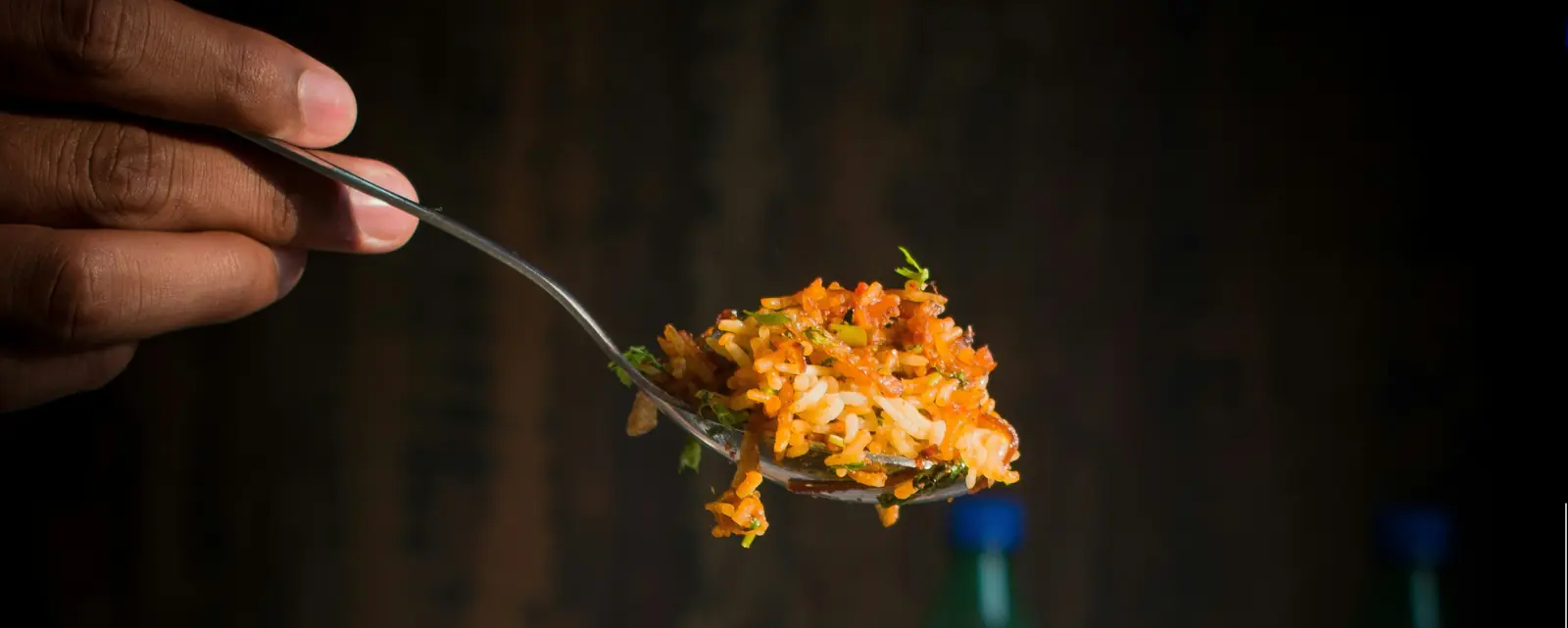
Mattancherry is also the neighbourhood where, in 1948, a cook named Kayikka began serving biriyani that Kochi still talks about. He cooked over wood fire, watched over every pot himself, and became a name that families trusted for their celebrations. Our own kitchen is inspired by it, and every pot is cooked by his daughter, Arifa.
Thoppumpady
A little further along the same coast the city turns to water. Thoppumpady is a working waterfront with a fishing harbour, an old harbour bridge and a fishing community that has shaped Kochi's maritime life. The fish markets open in the early morning, and the day here begins long before most of the city is awake.
It is easy to understand why biriyani is a food of generosity in places like this. A family that has worked since before sunrise wants a plate that is rich, filling and shared. Biriyani is exactly that: one large pot, many hands, and enough for the neighbours who drop by.
Ernakulam
Across the backwaters from old Kochi, the mainland city of Ernakulam is the commercial heart of the region. Marine Drive, MG Road and Broadway keep a fast pace, and further east in Kakkanad, Infopark brings together more than 500 companies and over 70,000 professionals.
Here biriyani plays a different part. It is the team lunch, the farewell, the festival celebration and the milestone, ordered in advance and shared across desks. It is one of the few dishes that lines up the newest joiner and the managing director for the same plate. If you are planning one for your own team, see our guide to office party catering in Kochi.
What Kochi style biriyani tastes like
Ask ten Kochi families to describe their favourite biriyani and you will get ten answers, yet a pattern appears: fragrant rather than fiery, gently spiced, meat that is tender, rice that stays separate, and a smell that arrives before the pot does. Many families also love the Malabar style, cooked with short grain rice and a generous hand with cashews and raisins. Kochi happily holds both.
What a guest told us
One guest who visited Kochi told us that after eating our chicken and mutton biriyani he had not found the same taste anywhere else in India, and that he missed the Sunday one o'clock biriyani. It is the best compliment a kitchen can receive, and it is the reason we keep the pot sealed and the pace slow.
The families behind the pot
Every great biriyani has a family behind it. Ours is the family of Kayikka, his wife Amina and their daughter Arifa. If you would like to taste where their cooking has led, you can order dum biriyani for your home on WhatsApp or book us for your next celebration through our catering page.